



Dealership blog
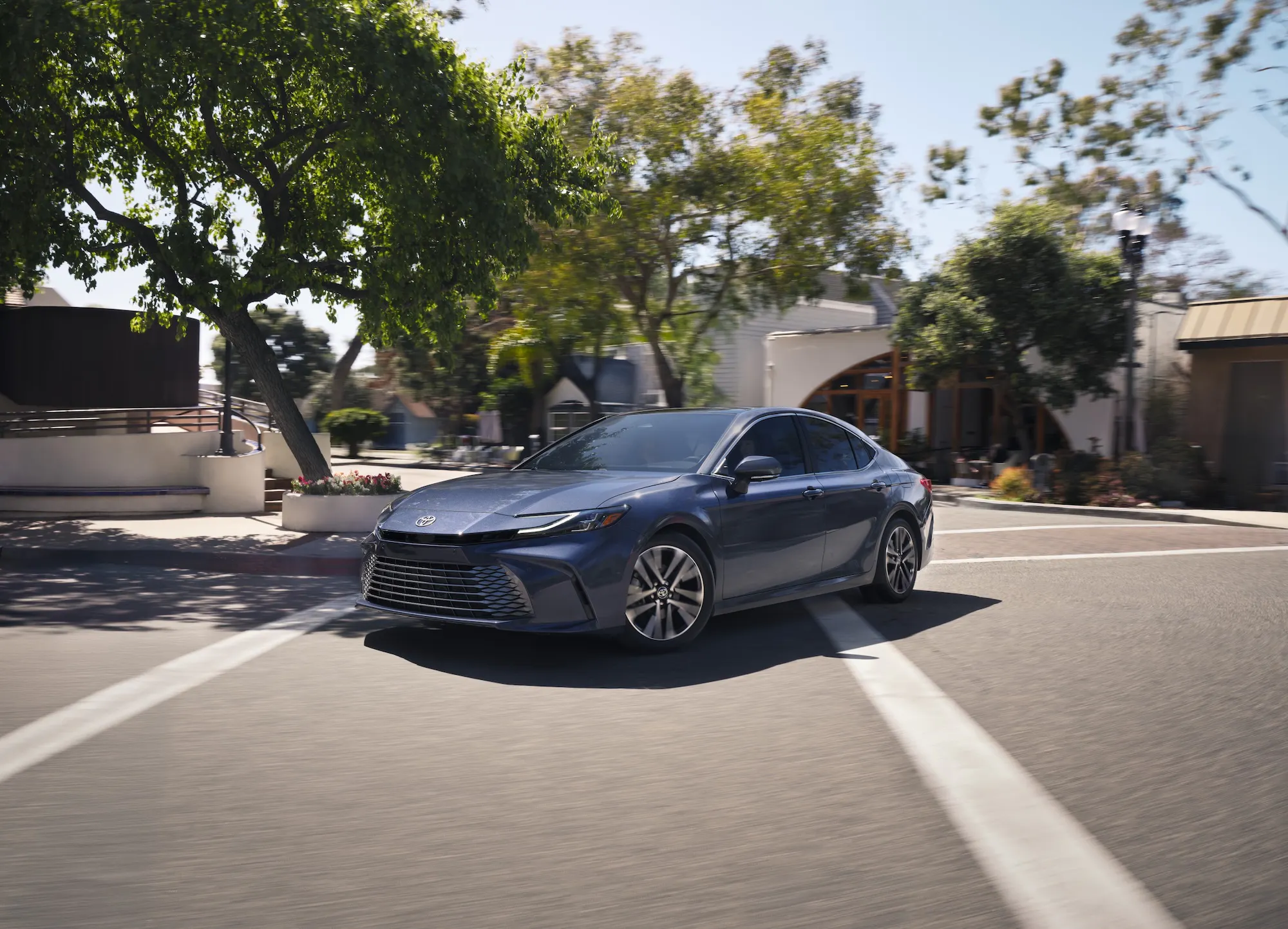
Toyota Camry Hybrid Powertrain: Performance and Ownership Explained
The 2026 Toyota Camry continues a significant shift that began with the prior model year: every trim level is powered exclusively by Toyota’s Hybrid Synergy Drive system. There is no longer a gas-only option in the lineup. If you are looking at any Toyota Camry for sale today, you are getting a hybrid by default, and that changes what ownership looks like in terms of fuel costs, performance, and long-term value in ways worth understanding before you buy.
How the Hybrid Powertrain Works
The Toyota Camry Hybrid runs on Toyota’s fifth-generation Hybrid Synergy Drive, pairing a 2.5-liter four-cylinder Atkinson cycle gasoline engine with one or two electric motors depending on drivetrain. Front-wheel drive models produce 225 horsepower through a single front electric motor. All-wheel drive models add a rear electric motor that operates independently of the front, bringing total system output to 232 horsepower. Power is delivered through a continuously variable transmission, with paddle shifters on SE and XSE trims.
The system switches between electric-only, combined electric and gas, and gas-only modes automatically based on driving conditions. In city traffic, the Toyota Camry Hybrid can run on electric power alone for a substantial portion of driving, which is where the efficiency gains are most pronounced. Regenerative braking captures energy during deceleration and returns it to the battery, reducing wear on the friction brakes over time.
MPG by Trim Level
Does the Toyota Camry Hybrid get the same fuel economy across all trims? Not exactly. The EPA-estimated ratings vary by trim and drivetrain configuration. The LE with front-wheel drive achieves the highest rating at 52 city / 49 highway / 51 combined mpg, making it the most efficient trim in the lineup. The LE AWD comes in at 50 city / 49 highway / 50 combined. Mid-range trims including the SE, Nightshade, XLE, and XSE in FWD configuration are rated at 47 city / 45 highway / 46 combined. AWD versions of those trims return slightly lower ratings, with the XSE AWD rated at 44 combined. All figures are EPA estimates and real-world results vary by driving conditions.
For a driver covering 15,000 miles annually, the difference between the LE’s 51 combined and a non-hybrid competitor averaging 29 combined represents hundreds of dollars in annual fuel savings that compound across the life of ownership.
Performance and Driving Dynamics
Is the Toyota Camry Hybrid slow compared to a traditional sedan? No. The 225 to 232 horsepower output is competitive in the midsize sedan segment, and the electric motor’s instant torque delivery gives the Camry stronger low-end acceleration than the horsepower figure alone suggests. The hybrid batteries are mounted under the rear seats rather than in the trunk, which lowers the center of gravity and contributes to composed, flat cornering. Toyota also re-tuned the suspension on the ninth-generation model for more responsive handling.
Three drive modes, Eco, Normal, and Sport, adjust throttle response and steering weight to suit different preferences.
Ownership Costs and Warranty
The Toyota Camry Hybrid’s hybrid battery is covered by a 10-year / 150,000-mile warranty on 2020 and newer models, which removes battery replacement as a near-term ownership concern for most buyers. Electric drive components including the transaxle and inverter are covered for 8 years / 100,000 miles. These are meaningful protections for buyers who factor long-term reliability into their purchase decision.
The Camry lineup carries a base MSRP* ranging from $29,100 to $37,025 depending on trim, with the new Nightshade Edition sitting at $32,300 between the SE and XLE. The team at Pinehurst Toyota in Southern Pines, NC can walk you through current Toyota Camry for sale inventory across all trim levels and help identify which configuration fits your driving patterns and budget. If you want to compare every Toyota Camry for sale side by side before deciding, the finance and sales teams at Pinehurst Toyota can run the numbers on fuel savings, monthly payment, and total cost of ownership across trims. Whether you are drawn to the LE’s class-leading efficiency or the XSE AWD’s sportier character, every Toyota Camry Hybrid delivers the same core powertrain reliability that has made the Camry the best-selling sedan in the United States for years.
Source: www.toyota.com
Frequently Asked Questions About the Toyota Camry Hybrid and Toyota Camry for Sale
Is the 2026 Toyota Camry available with a gas-only engine?
No. The entire 2026 Camry lineup runs on hybrid-only powertrains. Every Toyota Camry for sale in the current model year includes the Hybrid Synergy Drive system as standard equipment.
How long does the Toyota Camry Hybrid battery last?
Toyota covers the hybrid battery on 2020 and newer Camry models for 10 years or 150,000 miles. Most hybrid batteries last well beyond that under normal driving conditions, and battery-related issues are rare in Toyota’s hybrid lineup.
Does AWD affect the Toyota Camry Hybrid’s fuel economy significantly?
Yes, but modestly. The LE AWD is rated at 50 combined versus 51 for the LE FWD, a one mpg difference. The gap widens slightly in higher trims, with XSE AWD rated at 44 combined versus 46 for the XSE FWD.
What safety features come standard on every Toyota Camry Hybrid?
All 2026 Camry trims include Toyota Safety Sense 3.0 as standard equipment, which covers pre-collision system with pedestrian detection, lane departure alert, automatic high beams, radar cruise control, proactive driving assist, and blind spot monitoring with rear cross traffic alert.